Choosing the Right Types of Sockets: Key Factors for Professional Buyers

The socket is one of the most important tools in a tool set. You should choose the socket according to your actual needs. This article will introduce you to various types of sockets and their uses, helping you choose the most suitable socket tool to complete your work.
Type of Sockets

Impact Socket:
The impact socket set is designed for high-torgue applications. The wall thickness of the impact socket is thicker, its surface is black and has undergone black phosphating treatment. It is generally used in conjunction with impact tools. It is particularly suitable for removing rusty or overly tight fasteners. When you are engaged in car repair and workshop maintenance, this type of socket is indispensable.
Hex Socket:
The Hexagonal sockets are a very basic type of socket used to fit ordinary hexagonal nuts and bolts. They are suitable for household maintenance, mechanical assembly and car repair. Whether you are an ordinary user or a professional, you can consider this type of socket.
Torx Socket:
The Torx Socket corresponds to a star screw. It cannot be mixed with a hexagonal socket, because it may cause slippage and even damage the screw.When you work as a professional repairman and often deal with fasteners on European vehicles, this kind of socket will help you a lot.
Spark Plug Socket:
The Spark Plug Socket is specifically used to remove spark plugs. This type of socket is longer and deeper than ordinary sockets. There is a rubber ring or protective structure inside the socket, which can make the spark plug more stable when disassembling and assembling it. This type of socket is suitable for the maintenance of cars or other small engines and is an indispensable hardware tool during car repair.
Universal Joints Sockets:
The difference between the Universal Joint Socket and the common socket is that it has a universal joint structure. This type of socket can transmit torque at a certain angle. For example, when you are repairing a car and some bolts are blocked by other parts, ordinary sockets cannot go in. At this time, you need Universal Joints Sockets. If you often have to deal with complex maintenance work, this socket can help you solve the problem of limited linear space.
Flex Sockets:
Flex Sockets are somewhat similar to Universal Joint Sockets. They both have spherical swing structures, this socket looks more compact overall. Flex Sockets can flexibly enter narrow or biased spaces, which can greatly improve your operational efficiency for complex components.
Non-Sparking Sockets:
Non-Sparking Socket is mainly used in flammable and explosive environments. This type of socket is golden yellow or bronze in color because it is made of a special non-sparking material. If you work in chemical plants, mines or other places, using a non-sparking socket is safer.
4 Crucial Factors to Consider When Selecting Types of Sockets

Whether it's car maintenance or mechanical assembly, choosing the right type of socket set is very important, it will affect your work efficiency and use experience. Here are 4 steps to help you know how to select the right type of socket.
1. Fastener Type
Hexagonal nuts and bolts are the most common fasteners, so your first choice is hex sockets. If it is a fastener with a special structure, consider Torx Socket or other dedicated sockets.
2. Confirm Metric or SAE Before Buying
The sockets may look similar, but if the specification systems are different, problems will occur during use. Metric is expressed in millimeters and SAE in inches. Be careful not to confuse these two standards.
3. Match the drive size to the job
When choosing a socket, you need to select it based on your tools, torque and working scenarios. Common drive sizes include 1/4", 3/8", 1/2" and 3/4". Among them, 1/2" is the most widely used, while 1/4" and 3/8" are more suitable for small-sized fasteners.
4. Determine Whether Shallow Sockets or Deep Sockets are Needed
The shallow socket is more suitable for regular maintenance and locations with relatively compact space. The deep socket has a longer internal space, it can accommodate the threaded rods with more protrusions. When the fastener is located deep and the shallow socket cannot be fully inserted, you should use a deep socket.
FAQ
What Types of Sockets are the Most Commonly Used?
Hex Socket is the most common type. Hex sockets are frequently used in daily maintenance, car repair, mechanical assembly and household tool sets. They are suitable for most common hexagonal nuts and bolts. In addition to hexagonal sockets, dodecagonal sockets, deep sockets, impact sockets and spark plug sockets are also very common in the market.
What's the Best Type of Socket Set for Automotive Repair?
For automotive repair, 3/8" drive is the most practical and versatile. It can meet most of your maintenance and disassembly and assembly needs. If it involves chassis and tyre repair, you'd better prepare another set of 1/2" drive impact sockets.In addition, auto repair socket sets are generally metric, including shallow sockets and deep sockets, and are equipped with ratchet wrenches, extension rods and common accessories.
What is the difference between 1/4", 3/8"and 1/2" socket sets?
1/4" socket sets are usually smaller and lighter, suitable for low-torque and fine work. 3/8" socket sets are the most common in automotive maintenance. 1/2" socket sets are suitable for high-torque conditions and are used in conjunction with impact tools.
What is the Difference Between 6-point and 12-point Sockets?
Both hexagonal sockets and dodecagonal sockets can be used for hexagonal nuts. If you value torque, safe engagement and protective nuts, give priority to choosing a hex socket. If you value the convenience of spatial operations more, you can consider dodecagonal sockets.
What is the Difference Between Impact Sockets and Regular Sockets?
Impact sockets are mainly used for high-torque tools, while ordinary sockets are used for ratchet wrenches, extension rods and other tools. Impact sockets are heavier and thicker, with a black coating on the surface. The surface of ordinary sockets is usually bright chrome-plated. The structure and material of the ordinary socket is not suitable for long-term use in conjunction with impact tools.
Final Thought
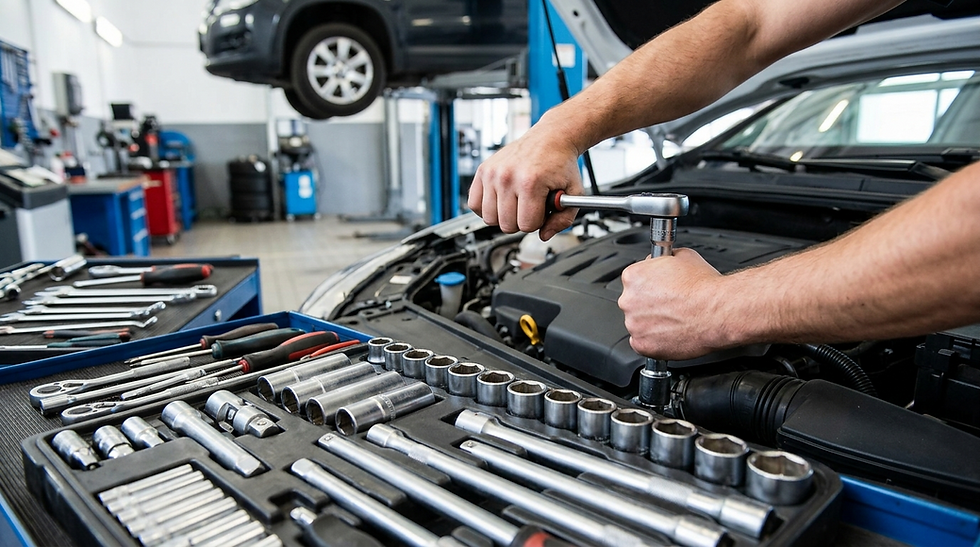
Different types of sockets are suitable for different fasteners and applications. Understanding their differences can help you make more accurate judgments when purchasing and selling.
For 25 years, Diversitech Global has been dedicated to developing high-quality tool sets, we not only manufacture high-quality sockets sets, but also can provide flexible OEM/ODM solutions according to your needs. Whether you wanna develop a new product line or upgrade the existing product range, our professional team can help you create a market-competitive tool set.


Gracias por compartir contenido tan útil y fácil de entender. A veces resulta complicado encontrar información organizada sobre los sorteos. La Lotería Nacional permite a los lectores consultar información relacionada con resultados, sorteos y números, lo que facilita mantenerse actualizado de manera sencilla.